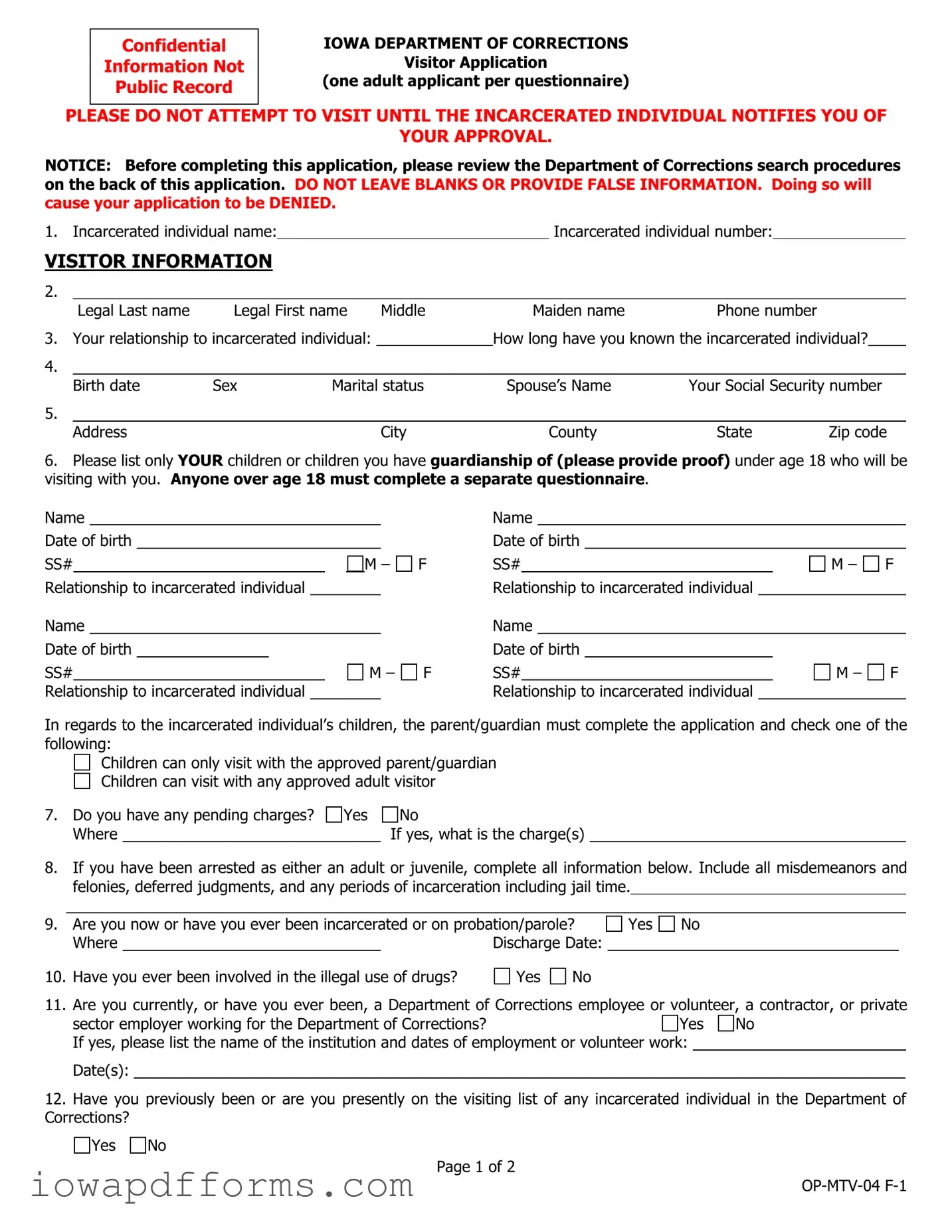
Fill in Your Iowa Visitor Application Template
Fill in Your Iowa Visitor Application Template
Iowa Universal Application - Attach additional sheets if more space is needed for responses.
Iowa 470 3361 - The form requires key information such as the child’s name and date of birth.
In Texas, ensuring your vehicle is properly registered and has valid license plates is crucial, and for those instances when you find yourself in need of a replacement, the Texas VTR 60 form is indispensable. This application allows you to request new license plates or registration stickers if they are lost, stolen, or damaged. For more information, you can visit Texas Documents to access the necessary forms and guidance.
How to Get Power of Attorney in Iowa - The form requires details about tax periods for which representation is granted.
The Iowa Visitor Application form bears similarities to the Visitor Application forms used by various correctional facilities across the United States. These documents typically require personal information from the visitor, including their relationship to the incarcerated individual, which establishes a basis for the visit. Like the Iowa form, many states mandate that visitors disclose any prior criminal history or pending charges, ensuring that the facility can assess the potential risk involved in allowing a visit. This common practice aims to maintain security and safety within correctional environments.
Another document akin to the Iowa Visitor Application is the Prisoner Visitation Request form used in federal prisons. This form also collects detailed personal information about the visitor, including identification and background checks. The emphasis on transparency regarding the visitor’s past, including any arrests or incarcerations, mirrors the Iowa form's requirements. Such thorough vetting processes are crucial in maintaining order and safety in federal facilities, similar to their state counterparts.
For families exploring educational options, the informative guide on the Homeschool Letter of Intent is an excellent resource that outlines the necessary steps and requirements before initiating a homeschooling journey.
State-specific Visitor Registration forms, such as those utilized in California, share a similar structure with the Iowa application. They require visitors to provide personal details, including their social security number and address. Additionally, these forms often inquire about the visitor's criminal history and any affiliations with the incarcerated individual. This information helps authorities evaluate the appropriateness of the visit and the visitor's potential influence on the incarcerated person.
The New York State Department of Corrections and Community Supervision employs a Visitor Application that closely resembles the Iowa form. It includes sections for personal identification and background information, which are essential for assessing eligibility to visit. Both documents emphasize the importance of providing accurate information, with consequences for falsification. This alignment reflects a common goal: to ensure that visits do not compromise the safety and security of the correctional facility.
In Texas, the Visitor Application form also parallels the Iowa version in its requirement for visitors to disclose their relationship to the incarcerated individual and any past criminal history. This information is crucial for the approval process, as it allows the facility to make informed decisions about visitation privileges. Both forms highlight the necessity of background checks as a means of safeguarding the institution and its inhabitants.
The Florida Department of Corrections uses a similar Visitor Application that collects extensive personal information from visitors. This includes inquiries about any previous interactions with the correctional system, such as being on a visiting list before or having visitation privileges denied. The Iowa form reflects this practice by asking similar questions, demonstrating a standardized approach to visitor screening across various states.
Additionally, the Visitor Application used in Illinois correctional facilities shares many characteristics with the Iowa form. Both require visitors to provide personal details, including their social security number and any criminal history. This focus on thorough background checks serves to protect both the incarcerated individuals and the facility from potential risks associated with unvetted visitors.
Finally, the Visitor Registration form from the Pennsylvania Department of Corrections is another document that parallels the Iowa Visitor Application. Like Iowa's form, Pennsylvania's application collects personal and background information from visitors, ensuring that only eligible individuals can visit incarcerated persons. This commonality underscores the importance of security measures in correctional facilities nationwide, aiming to create a safe environment for both visitors and inmates.
When applying to visit an incarcerated individual in Iowa, the Visitor Application form is just one of several documents that may be required. Each of these documents plays a vital role in ensuring the safety and compliance of the visitation process. Below is a list of other forms and documents commonly used in conjunction with the Iowa Visitor Application form.
Each of these documents serves a specific purpose in the visitation process. Ensuring that all necessary forms are completed accurately and submitted on time can help facilitate a smoother experience for both visitors and incarcerated individuals. It is important to carefully review each requirement to avoid any delays or complications.
When filling out the Iowa Visitor Application form, it’s important to follow certain guidelines to ensure your application is processed smoothly. Here are six things you should and shouldn't do: